
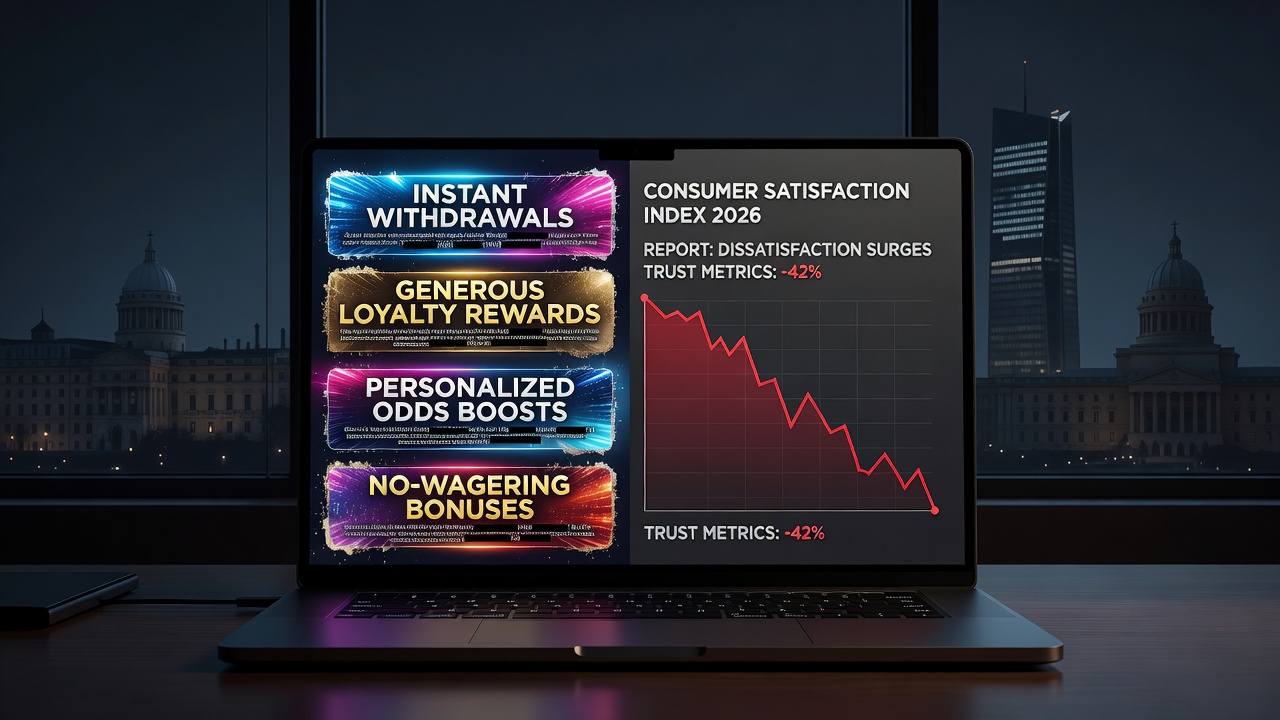
Complaint volumes filed with licensing bodies across major regulated markets have climbed steadily for three consecutive years, even as operator revenues continue to grow. That gap between rising profits and rising frustration tells a story the industry has been reluctant to confront. Bettors are not leaving in droves, but they are staying less happy, and the data on churn, app-store reviews, and dispute resolution requests all point in the same direction: igaming consumer satisfaction is eroding at a pace that outstrips the sector's own growth.
The reasons are not mysterious, but they are layered. Aggressive promotional bait-and-switch tactics, slower payout processing, and interface changes that prioritize engagement metrics over usability have all chipped away at trust. At the same time, players have grown more sophisticated. Someone learning the mechanics of a fast-paced title through a guide like aviator bet play is also, often without realizing it, comparing platform responsiveness, withdrawal speed, and customer support quality against a dozen competitors open in other browser tabs. That comparative behavior has made the market unforgiving of friction.
This piece looks at what is actually driving sports betting satisfaction decline, how operators are responding, and what the coming shifts in igaming industry trends 2026 suggest for the relationship between platforms and the people who use them.
The Current State of iGaming Consumer Satisfaction
Satisfaction in online gambling has always been volatile, tied closely to short-term outcomes like wins and losses. But the current decline is different in character. It is structural rather than emotional, rooted in operational friction rather than the ordinary disappointment of losing a bet.
What the Data Actually Shows
Independent review aggregators and regulatory complaint registers report a consistent uptick in grievances related to withdrawal delays, account verification bottlenecks, and unclear bonus terms. These are not isolated incidents tied to a single brand or jurisdiction; they appear across licensed operators in the UK, Malta-regulated platforms, and several US state markets. The pattern suggests systemic pressure rather than individual operator failure.
How Satisfaction Differs Between Casual and High-Volume Players
Casual players tend to tolerate minor inconveniences if the entertainment value remains intact. High-volume bettors, however, interact with support teams and payment systems far more often, and they notice degradation quickly. Their satisfaction scores have dropped more sharply than the casual segment, which matters disproportionately because this group generates a large share of platform revenue.
The Gap Between Perceived Value and Actual Experience
Marketing promises - instant withdrawals, generous loyalty rewards, personalized odds - often outpace what the product actually delivers. When expectation and reality diverge repeatedly, trust erodes faster than any single bad experience could cause on its own.
- Rising complaint volumes despite stable or growing user bases
- Sharper dissatisfaction among frequent, high-spend users
- Persistent gap between promotional claims and delivered experience
Sports Betting Satisfaction Decline: Root Causes
Sports betting occupies a distinct position within the broader igaming ecosystem because it combines real-time engagement with financial stakes tied to unpredictable outcomes. That combination amplifies any operational shortcoming.
Odds Compression and Reduced Value Perception
As markets mature and competition consolidates, many operators have tightened odds margins to protect profitability. Bettors notice this, particularly those who track line movement across platforms. The perception that value has quietly shrunk contributes directly to sports betting satisfaction decline, even when the underlying product quality hasn't changed.
Live Betting Glitches and Latency Issues
In-play wagering depends on split-second accuracy. Delays between an event occurring and odds updating - or worse, bets being voided after the fact - generate intense frustration. These technical failures, though often brief, leave a lasting impression because they involve real money and real-time stakes.
Responsible Gambling Friction Points
Mandatory affordability checks and deposit limit prompts, while necessary from a regulatory standpoint, are frequently implemented clumsily. Players report feeling surveilled rather than protected, particularly when verification requests interrupt active betting sessions without clear explanation.
Online Gambling Customer Satisfaction: Key Pain Points
Beyond sports-specific issues, broader online gambling customer satisfaction problems cut across casino, poker, and betting verticals alike. These pain points tend to cluster around three operational areas: payments, support, and platform design.
Withdrawal Delays and Payment Friction
Nothing damages trust faster than a slow payout. Players who deposit instantly and wait days for withdrawals interpret the asymmetry as deliberate, even when it stems from fraud-prevention checks or banking partner limitations. Transparent communication during these delays matters more than the delay itself.
Customer Support Quality and Response Times
Chatbot-first support models, adopted widely to cut costs, often fail to resolve complex disputes. Players escalating a payment or account issue frequently encounter scripted responses before reaching a human agent, extending resolution times and deepening frustration.
Bonus Terms and Wagering Requirement Complexity
Promotional offers remain a major acquisition tool, but the fine print attached to them - wagering multipliers, game contribution percentages, withdrawal caps - is frequently opaque. Players who feel misled by bonus terms rarely return, regardless of how generous the headline offer appeared.
Igaming Industry Trends 2026: What's Changing
The industry is not standing still. Several shifts already underway will reshape how operators approach retention and trust over the next several years.
AI-Driven Personalization and Its Double-Edged Impact
Artificial intelligence now powers everything from personalized odds boosts to predictive churn modeling. Used well, it can flag dissatisfied players before they leave. Used poorly, it can feel invasive, pushing targeted promotions that players interpret as manipulative rather than helpful.
Regulatory Tightening Across Multiple Jurisdictions
Stricter advertising rules, mandatory affordability checks, and enhanced data protection requirements are becoming standard across regulated markets. Compliance costs are rising, and operators that treat regulation as a checkbox exercise rather than a trust-building opportunity will likely see satisfaction continue to slide.
Consolidation and Its Effect on Product Differentiation
Mergers and acquisitions have reduced the number of independent operators, leading to homogenized product offerings. When platforms look and feel increasingly similar, customer service and payout reliability become the primary differentiators, raising the stakes for operational execution.
Shift Toward Skill-Adjacent and Interactive Formats
Crash-style games and interactive live formats have grown rapidly, drawing younger demographics who want faster, more visually engaging experiences. This shift is reshaping what players expect from every product category, including traditional sports betting interfaces.
How Operators Are Responding to Declining Satisfaction
Forward-looking operators recognize that reversing this trend requires structural change, not cosmetic fixes.
Investing in Faster, More Transparent Payment Systems
Some platforms have begun publishing average withdrawal times publicly and offering tiered fast-track payouts for verified accounts. This transparency, rather than the speed alone, is what rebuilds confidence.
Redesigning Support Around Human Escalation Paths
Rather than eliminating human agents, better-performing operators are using AI to triage simple queries while routing complex disputes directly to experienced staff, cutting resolution time without sacrificing support quality.
Simplifying Bonus Structures
A smaller but growing number of operators have moved toward no-wagering or low-wagering promotions, betting that simplicity and honesty will drive stronger long-term loyalty than aggressive but confusing offers.
What This Means for Players and the Industry's Future
The decline in satisfaction is not a signal that online gambling is losing its appeal; it is a signal that the market has matured to the point where players expect operational excellence, not just entertainment value. Operators that treat online gambling customer satisfaction as a core performance metric, rather than a marketing afterthought, will be the ones that retain players through the next cycle of regulatory and technological change.
Why Trust Will Become the Primary Competitive Advantage
As products converge in features and odds, trust - built through consistent payouts, honest terms, and responsive support - becomes the hardest thing for competitors to replicate quickly.
The Role of Player Education
Better-informed players make better decisions and report higher satisfaction overall. Clear rules guides, transparent odds explanations, and accessible responsible gambling tools all contribute to a more sustainable relationship between platforms and users.
Frequently Asked Questions
Why has sports betting satisfaction dropped even though more people are betting online than ever?
Growth in user numbers and satisfaction are not the same metric. New users often join during promotional periods and haven't yet tested support quality or withdrawal reliability, so early enthusiasm can mask deeper operational problems that surface only after prolonged use.
Are withdrawal delays usually intentional on the operator's part?
Rarely. Most delays stem from fraud-prevention checks, banking partner processing times, or regulatory verification requirements rather than deliberate cash-flow management. However, poor communication during these delays makes them feel intentional, which damages trust regardless of the actual cause.
How can I tell if a betting platform has genuinely low satisfaction issues before signing up?
Check independent regulatory complaint registers, read recent app-store reviews focusing on withdrawal and support comments specifically, and look for published average payout times. Marketing pages rarely reflect actual service quality.
Do responsible gambling checks make the experience worse for most players?
They can, particularly when implemented without clear explanation or triggered mid-session. Well-designed responsible gambling tools that communicate proactively tend to generate far less frustration than reactive, poorly explained interventions.
Will AI personalization improve or worsen satisfaction going forward?
It depends entirely on implementation. AI that anticipates genuine problems, like flagging a stuck withdrawal before the player complains, improves satisfaction. AI used mainly to push targeted promotions tends to feel intrusive and erodes trust over time.
Is the decline in satisfaction likely to continue through 2026 and beyond?
Current trends suggest continued pressure unless operators shift priorities toward payment transparency, support quality, and honest promotional terms. Regulatory tightening will likely force some of this change regardless of operator willingness, which could stabilize satisfaction levels over the medium term.